See an Informix estate two ways: diagnose it, and optimise it.
Keeping an Informix estate healthy and fast is two different questions, and this answers both without a full-time Informix specialist. One method asks the engine — an agentless diagnostic that encodes senior-DBA triage across the whole estate. The other listens to it — a passive wire-tap that reads the real workload off the network and shows exactly where time is going. Both are read-only and safe on production.
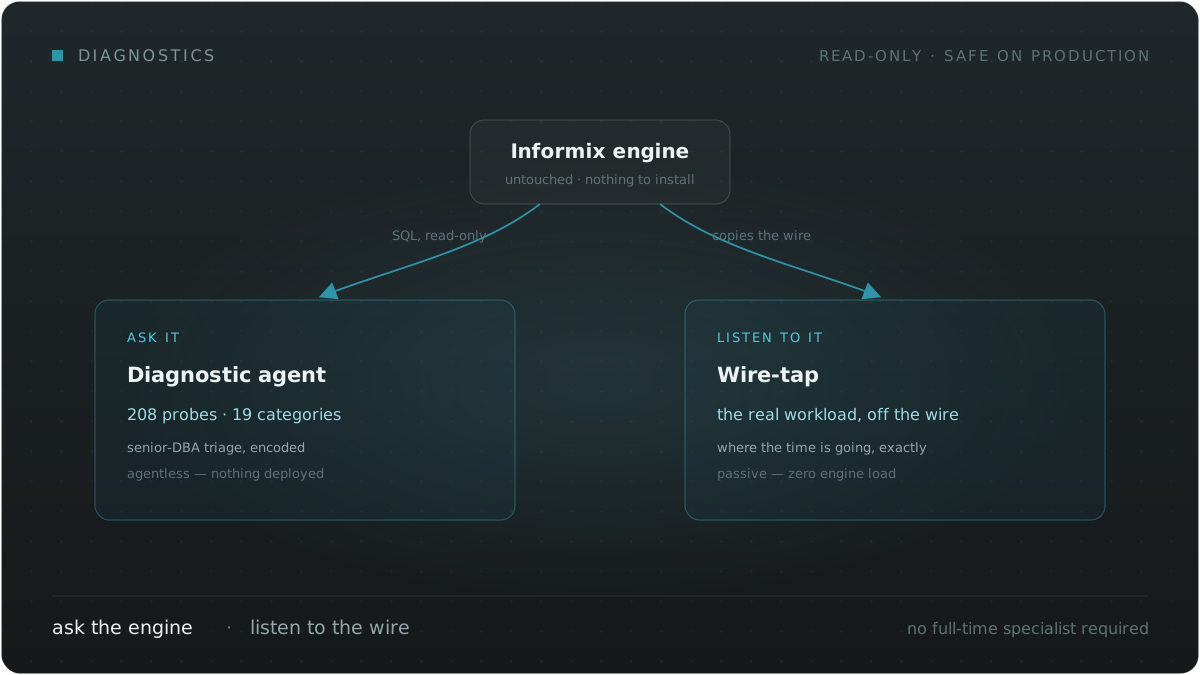
Two questions, two methods
An estate under strain raises two separate questions. Is the system healthy? — the configuration, the memory and buffers, the locks, the storage, the host, the security posture. And where is it spending its time? — which statements actually cost the most, and which application or user is driving them.
They are answered by two different methods, and the methods complement each other. The diagnostic agent asks the engine and applies a rules engine to the answers. The wire-tap listens to the traffic and reconstructs the real workload. Together they cover both questions; each stands on its own. Both read; neither writes — what a run may touch, and under whose credentials, is set out in the trust centre.
The distinction matters most on a large server. Asking the engine is how health, configuration and attribution are established — and on SQL it meets the limit of what a database records about itself: a completion ring holding seconds of history on a busy box, and sampling that sees only what is executing at the instant it looks. Listening to the wire has no such limit, because the measurement happens off the database entirely. That is what keeps the second question answerable at five thousand statements a second: which statement, which application and which user is consuming the CPU and the I/O — the programming issue behind a system that has quietly become slow.
Two methods — start with the question you have
The diagnostic agent
Asks the engine. An agentless diagnostic reads the engine and host over one connection, runs 208 vetted probes across 19 categories, and encodes senior-DBA triage into severity-ranked findings with evidence, remediation and a primary suspect — from a multi-server console or an AI agent over MCP. The question it answers: is the estate healthy?
Explore the diagnostic agent →The SQL wire-tap
Listens to the wire. A passive tap reads the real workload off the network with zero engine load and nothing to enable, ranks the costliest statements and transactions, keeps a second-by-second history of what the server was busy with and a week of workload snapshots to compare, and names the session holding the locks. The questions it answers: where is the time going, and what changed?
Explore the SQL wire-tap →Not sure which you need?
Tell us the symptom — a slow report, a stalled overnight batch, a server under strain — and we will point the right method at it, or run both, and walk you through what they find.
Book a session →